
Skip to content
Dola Academy logoDola Academy
Training Tracks

Four tracks, four different starting points

Participants arrive at very different levels of readiness. Placing someone into exam preparation before they are ready produces frustration; a short foundations block first meaningfully improves completion.

Preparation and education only

Dola Academy does not issue licenses, does not confer certifications, and does not guarantee examination outcomes, employment, or placement. Eligibility, application, examination, and credentialing requirements are set solely by the applicable state agency or certifying body, and participants should verify current requirements directly with that authority.

Dola Academy provides educational programs and program-development support only. We do not guarantee grant awards, employment, professional licensure, certification, or examination outcomes. Program eligibility, funding decisions, licensing, and credentialing are determined solely by the applicable agency, board, or funder.

Learn it here. Practice it in the field.

A training-to-field pipeline, not a lecture series

Participants start in a structured instructional setting — systems, tools, safety, methods, and report writing — then apply the same skills at real residential properties under supervision before working independently.

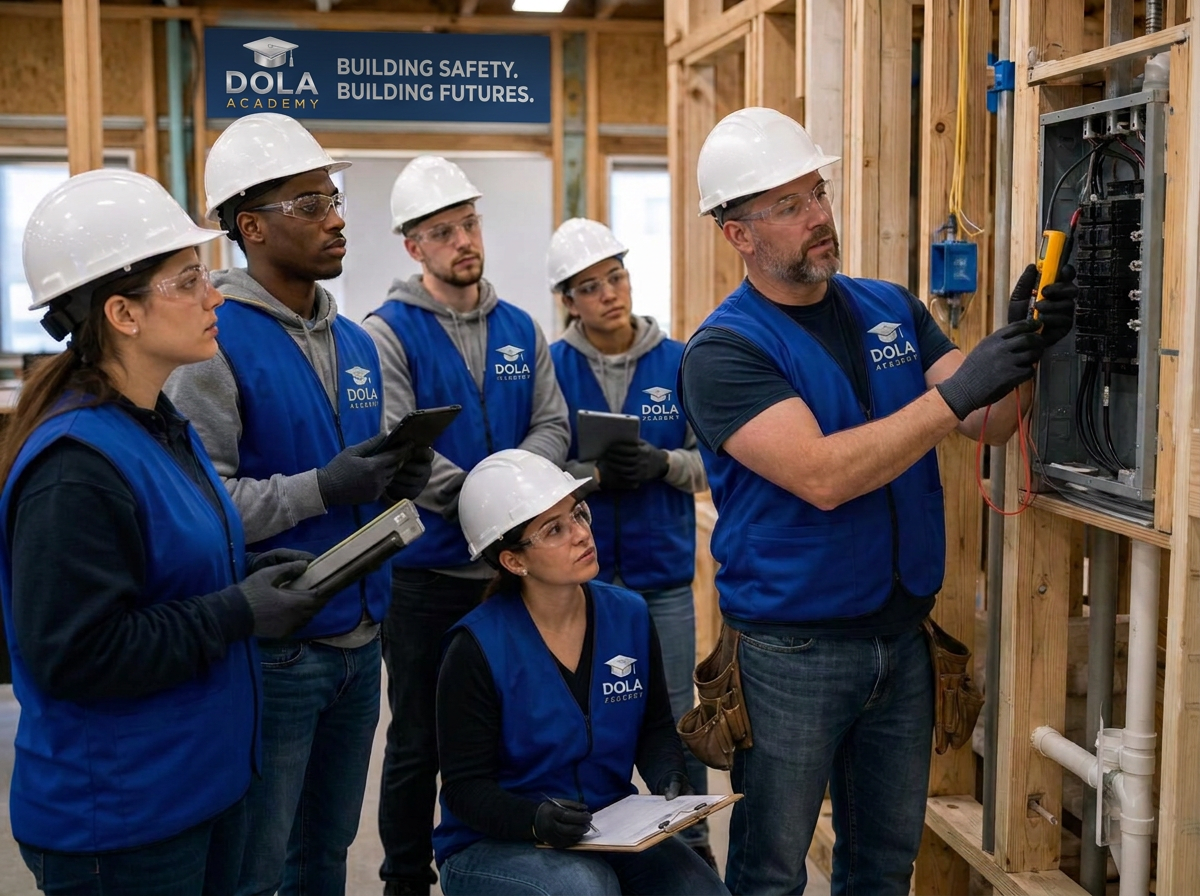
An instructor demonstrating safe circuit tester use on a mock residential wall while a diverse cohort of learners in Dola Academy branded vests and hard hats observe and take notes
Step one — instruction. Learners work through home systems, inspection methods, tool handling, PPE, and report documentation in a controlled training environment.
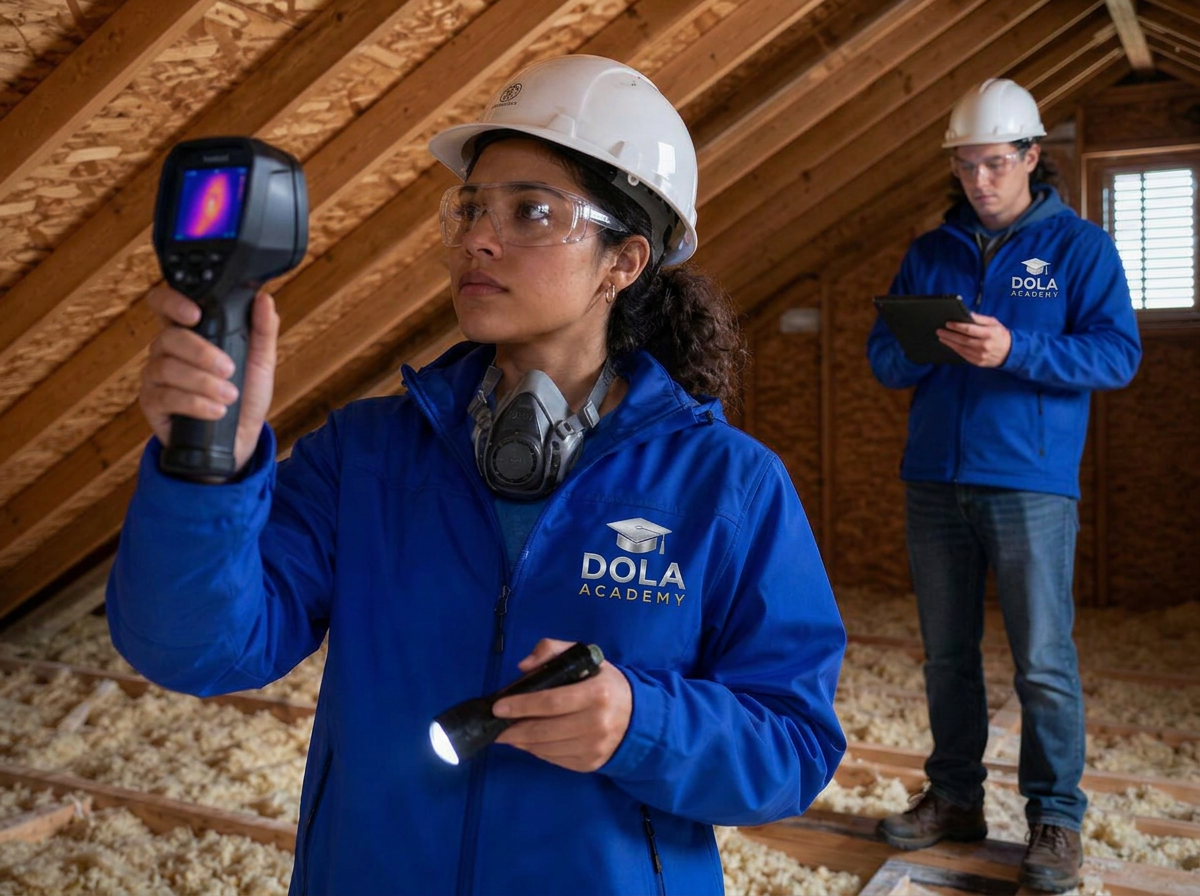
A learner inspector in a hard hat and Dola Academy branded jacket scanning attic framing with a thermal camera while a colleague documents findings on a tablet
Step two — field application. The same checklists, tools, and documentation practices move to real property conditions, with supervision until participants can work with confidence.
Track detail

What each track covers and who it fits

Home Inspector Preparation

Preparation-focused instruction covering residential systems, inspection process, observation discipline, and reporting practice for adults pursuing home inspection work.

Best fit: Adults with construction, maintenance, or trades exposure, or Workforce Foundations graduates ready for technical content.

Representative content

  • Structural components, roofing, and exterior observation
  • Electrical, plumbing, HVAC, and interior systems fundamentals
  • Inspection sequence, tooling, and safety awareness
  • Defect identification language and report writing practice
  • Client communication and professional conduct expectations

Depth, pacing, and session count are set during scoping based on cohort profile and available participant time.
ICC Residential Building Inspector Preparation

Structured study support for adults preparing for residential building inspector examination content, focused on locating, reading, and applying residential code provisions.

Best fit: Participants comfortable reading technical material who intend to pursue examination through the certifying body.

Representative content

  • Navigating residential code structure and terminology
  • Foundations, framing, and structural provisions
  • Building envelope, energy, and moisture provisions
  • Mechanical, plumbing, and electrical provisions in residential context
  • Applied practice questions and code-lookup drills

Depth, pacing, and session count are set during scoping based on cohort profile and available participant time.

Housing & Rehabilitation Education

Practical housing literacy for community development, housing counseling, homeowner assistance, and neighborhood revitalization programs.

Best fit: Housing program staff, community organization participants, and residents in revitalization target areas. No prior technical experience required.

Representative content

  • Reading a home: structure, systems, and condition indicators
  • Rehabilitation scope development and prioritization
  • Health, safety, and habitability concepts
  • Documenting property condition clearly and consistently
  • Working with contractors, scopes, and timelines

Depth, pacing, and session count are set during scoping based on cohort profile and available participant time.

Workforce Foundations

The readiness layer beneath every technical track: the communication, documentation, and professional habits that determine whether a placement lasts.

Best fit: Adults new to the workforce or returning after time away, including reentry and youth pathway participants.

Representative content

  • Workplace communication and following written instruction
  • Documentation, note-taking, and reporting basics
  • Safety awareness and job-site expectations
  • Reliability, scheduling, and problem escalation
  • Interview preparation and professional presentation

Depth, pacing, and session count are set during scoping based on cohort profile and available participant time.

Placement guidance

Where should a participant start?

A brief intake conversation usually resolves placement. These patterns cover most cases.

No prior technical experience

Start with Workforce Foundations, then move into Housing & Rehabilitation Education for applied context.

Housing or community development staff

Housing & Rehabilitation Education directly; it assumes no construction background.

Trades or maintenance background

Home Inspector Preparation is usually the right entry point.

Pursuing residential code work

ICC Residential Building Inspector Preparation, after confirming eligibility with the certifying body.

Youth or first-job participants

Workforce Foundations, optionally paired with a short technical exposure block.

Reentry participants

Workforce Foundations with flexible pacing coordinated with case management.

Already enrolled in a program?

Enrolled learners access coursework, lessons, and progress tracking in the Dola Academy student portal.

Student Login

Sponsor a cohort in the track your community needs

Counties, nonprofits, employers, and foundations fund seats so cost stops being the barrier between a resident and a completed program.