

Skip to content
Dola Academy logoDola Academy
Nonprofits & Community Organizations

Expand your mission without building every curriculum from scratch

You already hold the community trust and the participant relationships. What usually stalls program expansion is instructional capacity — curriculum, content, delivery systems, and someone to answer participant questions. That is precisely what we supply.
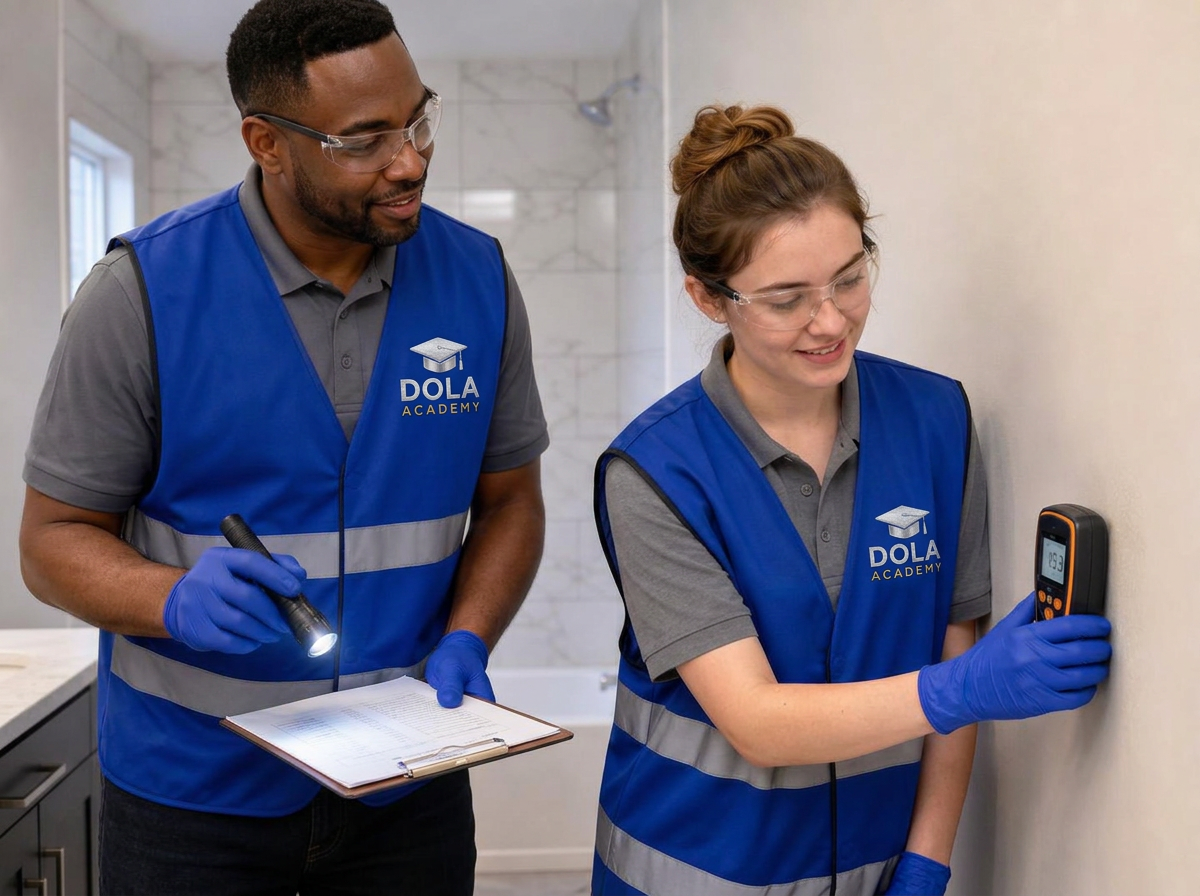
A mentor inspector in a Dola Academy branded vest guiding a newer inspector through a moisture reading during a bathroom inspection
The capacity problem

Curriculum development is slow, costly, and rarely why your organization exists

Organizations that build training internally often delay launch by six to twelve months, spend staff time they cannot spare, and end up with content nobody has bandwidth to maintain. Partnering shortens that to a scoping conversation and an implementation plan.

Structured curriculum

Sequenced modules with defined objectives, ready to deliver, instead of a folder of slides assembled between grant deadlines.

Participant-facing content

Materials written for adult learners in plain language, without assuming prior technical education.

Digital learning systems

Participants access coursework and track progress through the Dola Academy student portal on a phone, tablet, or laptop.

Subject-matter content

Housing, inspection, rehabilitation, and workforce readiness material developed by people who work in the subject, not repackaged from generic sources.

Guided Q&A support

SEREN gives participants and staff a consistent place to get answers about program scope, expectations, and next steps.

Implementation guidance

Cohort design, scheduling, capacity planning, and facilitation guidance so launch does not depend on one overextended staff member.

Cohorts

Defined participant groups with shared pacing and milestones, which measurably improves completion over open-ended enrollment.

Partner-specific enrollment pathways

An enrollment route reserved for your participants, so your intake process stays intact and your reporting stays clean.
Program contexts

Where nonprofit partnerships typically land

Different populations need different pacing and support. A reentry cohort and a youth exposure cohort can share content but should never share delivery assumptions.

Grant-funded workforce programs

When a grant includes a training component, the educational design has to exist before the reporting period ends. We build that component and document it clearly.

Adult learners

Adults returning to structured education need pacing, plain language, and flexible scheduling. Programs designed around those needs finish; programs that ignore them do not.

Youth pathways

Career exposure and readiness content for young adults, appropriate for summer initiatives, school-to-work partnerships, and youth development grants.

Reentry participants

Flexible scheduling and supportive pacing coordinated with your case management, so instruction complements rather than competes with participant obligations.

Housing education

Property condition, rehabilitation scope, and inspection literacy for housing counseling, homeowner assistance, and neighborhood revitalization work.

Sponsored certification preparation

Preparation cohorts funded by your organization or a sponsor. Preparation only — we do not issue certifications or guarantee examination outcomes.

Community technical education

Short technical literacy blocks that let residents test interest before committing to longer pathways, useful for community engagement and outreach programming.

How it works

A partnership that respects your existing process

You keep intake, eligibility, and participant relationships. We supply structure, content, and delivery support behind them.

  1. 1Scoping conversationPopulation, program goals, funding status, participant count, and timeline.
  2. 2Program outlineObjectives, module structure, delivery format, and cohort design in writing for your board or funder.
  3. 3Enrollment pathwayA partner-specific route for your participants so intake and reporting stay clean.
  4. 4Delivery and supportInstruction, participant access, guided Q&A, and staff coordination through completion.
  5. 5ReportingCompletion summaries and progress documentation matched to your grant or board reporting cycle.

Common questions from nonprofit leaders

Do we need our own instructors?
No. We can deliver directly, or prepare your staff to facilitate through Train-the-Trainer support.
What if our funding is not confirmed?
That is a normal starting point. Design during planning so implementation can begin promptly if an award arrives.
Can the program match our grant language?
Yes — objectives, delivery model, and measures are documented to match your program description, though we never guarantee awards.
Who owns the materials?
Dola Academy retains content ownership; your organization receives use rights for the agreed program and term.

Important: Dola Academy provides educational programs and program-development support only. We do not guarantee grant awards, employment, professional licensure, certification, or examination outcomes. Program eligibility, funding decisions, licensing, and credentialing are determined solely by the applicable agency, board, or funder.

Add a training program to your mission this year

Bring your participant population, program goals, and funding stage. We will return a scoped outline you can take to your board or your funder.